How different is developing for a CPU and discrete GPU vs. CPU and multi-GPU vs. APU and GPU? Does AMD have some sort of best practices or SDK that interfaces with all of these various configurations?
It depends. Some games will work just fine out-of-the-box when (for example) run on CrossFireX technology configurations because none of the rendering techniques used in the game are AFR-unfriendly (AFR stands for Alternate Frame Rendering). We recommend design techniques that do not require a render dependency on the previous frame; this will enable maximum performance scaling on multi-GPU configurations and is clearly the best way to leverage our CrossFireX technology solutions. 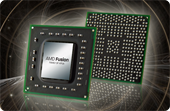
When this simply isn’t possible, our AMD Developer Relations team works with the game studio to adapt the algorithm to multiple GPUs. We use our AMD GPU Services library to detect the number of GPUs active in the system—the game will adapt its rendering code accordingly. This requires a bit of extra work on both sides but enables optimal performance scaling across multiple GPU configurations. In some cases we also involve the driver team to ensure a suitable CrossFireX profile is created for a given application.
Programming for APU+GPU can be similar to programming for CrossFireX. If both the discrete GPU and the APU are enabled then the game will basically be running in CrossFireX mode and the same considerations mentioned above will apply. Going forward, I do anticipate a closer relationship between the APU and the GPU where developers are individually targeting the desired Processing Unit for a given amount of work. For example C++AMP or OpenCL could be used to run parallel code on the APU part of the system while the discrete GPU will be tasked with the bulk of the rendering. This approach will allow more efficient task sharing between APU and GPU whereby the APU can execute parallel code on system memory data without needing to copy it to video memory first.
How does AMD support the developer post-launch when there might still be some further performance tweaks had for a game?
Obviously the aim of our Developer Relations services is to work with developers throughout development to avoid any visual or performance irregularities in a title at launch. In rare occasions, we release a “preview” driver—essentially, a driver update that occurs between the regularly scheduled monthly updates—to optimize performance for a specific title. We may also keep working on optimizations with the developers if a patch is planned.
Does AMD have recommendations on which development platform to use or which software to assist in code writing?
Not really. The development or authoring software that developers use does not affect our level of support. We find that developers tend to use the same development tools such as Visual Studio and 3D Studio Max.
What we do recommend is using industry standard APIs. This is where the market is going, and these allow a larger customer base to benefit from the code written for those APIs.
We also advise that games are developed on platforms that include a healthy mix of AMD and other IHV hardware. Developers want their games to run on all graphic cards brands and we would not solely recommend developing on AMD hardware only.
If a developer is having problems deciding DX9 or DX11, what would AMD recommend?
DirectX 11 provides a lot of features that DirectX 9 does not, so if you want your GPU to shine you really need to target this API. On top of that, DirectX 11 boasts superior performance due to reduced runtime and driver overhead. It is worth nothing that OpenGL exposes most of DirectX 11 features and can therefore also be considered a good API choice to drive GPU hardware.