Atlus is known for being willing to give a chance to some rather unusual games, going forward with ideas that other publishers and developers wouldn’t risk. Catherine is their latest effort along those lines, mixing the conflict of a love triangle and the mystery of a wave of inexplicable deaths alongside a ’climbing blocks’ puzzle game. With several stages and roughly a half-dozen endings to see, players are treated to both challenging but interesting play mechanics and a story that becomes quite good once it gets past an oddly paced start.
 Players take control of Vincent, a software programmer in his early thirties. He has a casual relationship with his girlfriend, and is generally content to live a stable middle-class life of hanging out with his friends and keeping up with the latest electronic devices. Yet one thing after another begins to go awry for Vincent when his girlfriend Katherine begins pushing for marriage, a lively blonde named Catherine begins blatantly vying for his affection, recurring nightmares disrupt his sleep, and various people around the city die under mysterious circumstances. It’s up to the player to guide Vincent through all of these matters, and you get a fair amount of freedom in how you do so. Catherine splits its content into three major types: cutscenes, bar socialization segments, and puzzle stages. The former are fairly static, with a mix of anime and in-engine scenes that are chosen based on your actions in the story so far. Once you’re done with these, players then get to control Vincent as he hangs out with his friends at a local bar. That may sound pretty mundane, but it’s simultaneously both important and relaxing. Wandering the bar lets Vincent speak with others who have some insight on his problems (and in turn he may be able to help them with their own), enjoy a jukebox loaded with excellent music, and play a retro-style arcade game.
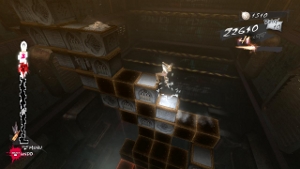
You’ll also receive regular phone calls and emails from other characters, and get to construct Vincent’s replies from various pre-made lines until you have a response that roughly indicates what you want to tell that character. These responses influence the story in a mix of subtle and obvious ways, keeping the player engaged until it’s time to move onto the puzzle stages that form the real core of the game. Each night, Vincent enters a nightmare where he must climb a tower made of individual blocks. The tower is rarely climbable in its starting condition, so Vincent will have to move the blocks around until he can make his way to the top. It starts as just a matter of pushing and pulling errant blocks, but each stage introduces new concepts you’ll need to learn. In time, you’ll have Vincent connecting blocks in truly strange patterns and using them in increasingly creative ways (think "Jenga, but your goal is to climb the resulting structure") to make your way past what would otherwise be insurmountable obstacles.
By constantly adding new techniques, the otherwise short puzzles avoid becoming too repetitive. This is good, since puzzle segments will only last about five to twenty minutes apiece; this is about half of what the cutscene and bar segments between them amount to. Of course, some of this is enforced by the stage itself; each puzzle will kill Vincent if he does not make consistent and quick progress so players will have to think quickly.